Read it as a customer
Put the front, back and side panels in reading order. Check whether the product name, variant and quantity still make sense when the pack is held normally. Ask someone outside the project to identify the product from the front alone. If you need to explain the visual hierarchy, it probably needs another pass.
Read it as a printer
Keep the structural reference clearly separated from printable artwork. Check the supplier’s current requirements for bleed, safe areas, overprint and special finishes. Do not invent a universal allowance: the right value depends on the structure and process. Name the file so its size and revision are easy to identify.
Read it as an object
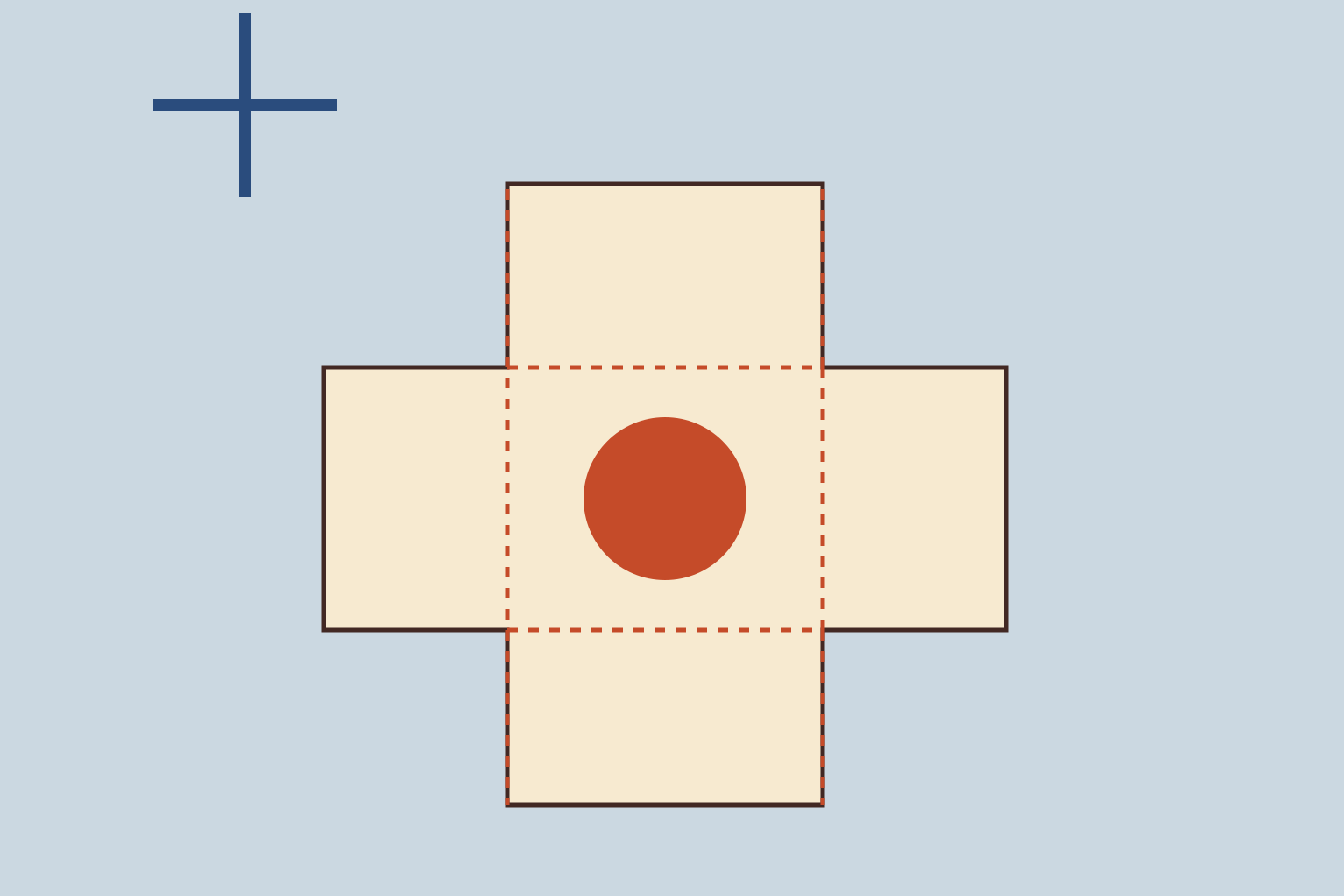
Follow every fold and seam. Look for small type that becomes awkward near a crease, a stripe that breaks at a join and a graphic that appears upside down when a flap is opened. Print a rough paper version when possible. It often reveals a problem that is easy to miss on a large monitor.
Make the approval unambiguous
Keep the approved flat artwork, the corresponding preview and a short list of production notes together. Record which version was approved and by whom within your team. If a later change affects a barcode, ingredient line or dimension, treat it as a new review rather than a cosmetic amendment.
Leave a clean trail
Archive the previous revision instead of naming every new file “final”. A short, consistent naming convention does more for a busy handoff than a long explanatory email. The aim is for a supplier to know exactly which file to use without having to interpret your folder.